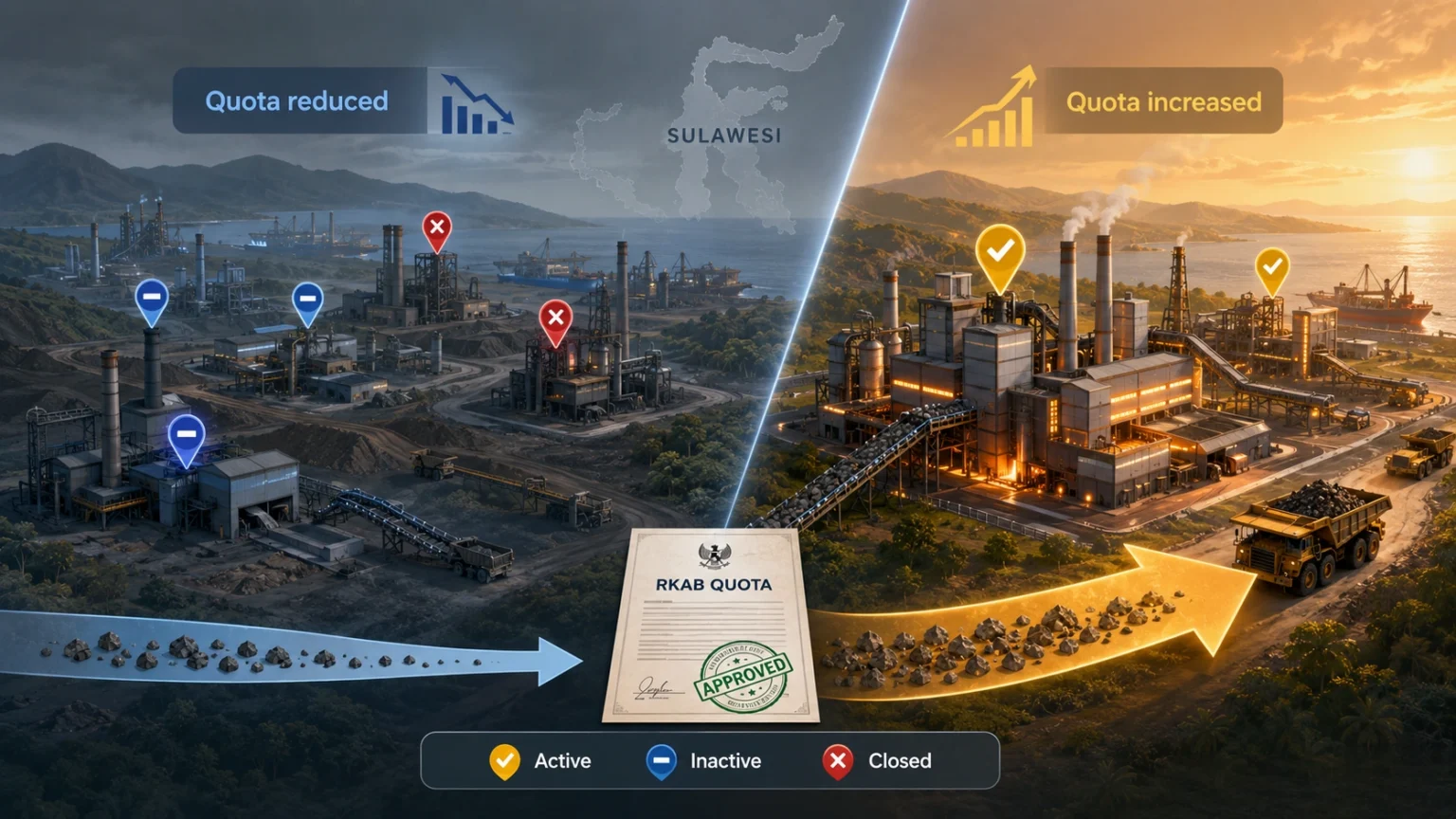
The recent Indonesia Critical Minerals Conference & Expo 2026 in Jakarta shone a spotlight on the current state of nickel supply in the country, with industry group FINI reporting that capacity utilisation across class II nickel producers had fallen by over 10% compared to a year ago.
Of course, this came as no surprise to users of the SAVANT platform who have been well aware of this for several weeks now, as operators react to the more than 20% reduction in mining quotas for this year to ‘only’ 260 – 270 million tonnes. Indeed, a snapshot from last Friday shows that of the 15 plants on the island of Sulawesi outside of the Morowali Industrial Park (IMIP), 8 were registered as inactive:
Chart 1: SAVANT monitored ferronickel and NPI smelters, Sulawesi, Friday 5th June
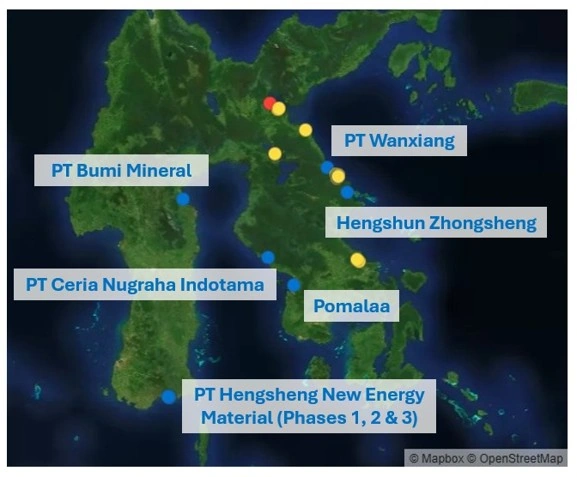
Yellow = active, blue = inactive, red = closed
What is becoming obvious is that the government’s intervention in the market is creating winners and losers, due to a redistribution of quotas rather than industry-wide cuts. For example, Australian listed company Nickel Industries, the majority owner of the Hengjaya mine that feeds their HNI and RNI smelters, announced that their quota (RKAB) had actually risen this year by almost 60%, from 9 million to 14.3 million tonnes. Could this be reward for the company’s strong emphasis on environmental protection within its mining concession?
On the other hand, PT Weda Bay Nickel – a joint venture between Eramet, Tsingshan and PT Antam – who operate the world’s largest nickel mine, have seen their RKAB slashed by 70% from 42 million tonnes in 2025 to just 12 million this year. This prompted Eramet Indonesia’s CEO to reveal on the sidelines of last week’s conference that mining operations had been halted, as the company seeks to get a permit extension. And while SAVANT monitoring indicates that the smelters in the Weda Bay Industrial Park (IWIP) are yet to show any signs of disruption from a dearth of feed, this would seem a likely outcome in the near future.
Chart 1: SAVANT monitored NPI smelters, IWIP, Friday 5th June
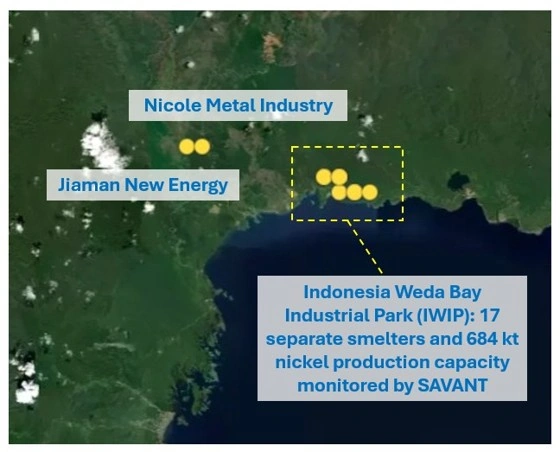
Yellow = active, blue = inactive, red = shutdown
Earlier this year it was reported that President Subianto’s government could revoke the license of another operator, PT QMB New Energy Materials, following a tailings landslide that killed a contractor. And only last month the South Sulawesi High Prosecutors’ office searched PT Huadi Nickel Alloys’ smelter at Bantaeng on suspicion of corruption. Under the auspices of rebalancing the market to support prices, the authorities may now be (finally) taking the opportunity to ‘clean up’ the industry – both in terms of environmental performance and corporate stewardship.